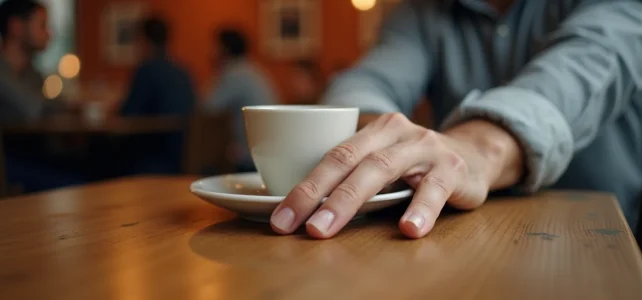
The little finger nail, intentionally left longer than the others, is a bodily detail that transcends eras and continents. This practice primarily concerns men, and its origins are rooted in social codes, utilitarian uses, and cultural beliefs that vary across different regions of the world.
The long little finger nail as a functional tool in daily life
Before exploring the symbolic dimensions, it is essential to understand an often-overlooked aspect: the long pinky nail has primarily served as a practical tool in everyday life. In several regions of Asia and Africa, this nail replaces small everyday instruments.
It allows for opening envelopes, scratching surfaces, peeling off adhesives, or handling small objects without resorting to a knife or tweezers. Some artisans use it for precision tasks in their manual work.
Traditional doctors, particularly in Chinese medicine, use an elongated little finger nail to stimulate specific acupuncture points on the patient’s body. The nail then acts as a therapeutic instrument, applying more targeted pressure than the fingertip.
To better understand the meaning of the long little finger nail, it is also important to consider the social codes surrounding it in different cultures.
Social status and little finger nail: an ancient code in China and Asia
The link between long nails and social status dates back several centuries in China. Wearing one or more long nails indicated that the person did not engage in manual labor. It was a visible sign of idleness and wealth.

This convention applied to the aristocracy and scholars, for whom hands were to remain intact, preserved from any physical task. The little finger nail, being the most discreet and least obstructive for everyday gestures, was often the one that was allowed to grow first.
This practice has persisted well beyond the imperial court. Some contemporary Chinese business leaders still sport a long little finger nail, deliberately perpetuating this marker of success. The code remains recognizable in parts of Southeast Asia, where a well-groomed nail on the little finger indicates a lifestyle removed from physical labor.
A different interpretation in Western cultures
In Europe and North America, the dominant interpretation has long been quite different. The long nail on the little finger has been associated, since the 1970s-1980s, with cocaine use. The nail served as a small spoon for scooping and inhaling the substance.
This association remains vivid in the Western imagination, to the point that the practice is often misinterpreted when observed in individuals from cultures where the social code is entirely different. An Asian businessman and an American musician with the same long nail do not convey the same message.
Long little finger nail and current trends on social media
In recent years, the practice has seen a resurgence in visibility, driven by social media. Male content creators on TikTok and Instagram use the little finger as a means of personal expression.
The principle of the “single-nail statement” involves keeping one nail longer (often the pinky), sometimes polished or decorated, while the others remain short. This gesture functions as a subtle aesthetic signal, straddling the line between nail art and identity affirmation.
- Nail artists interviewed by media such as GQ US describe the little finger nail as a “discreet signal of transgression of gender codes”
- The trend agency WGSN has identified the rise of this phenomenon in its report on male grooming, labeling it an emerging trend among men under 35
- In K-pop and C-pop, some male artists appear with a slightly longer little finger nail in their music videos, which fans replicate through mimicry without always knowing the social history behind this gesture
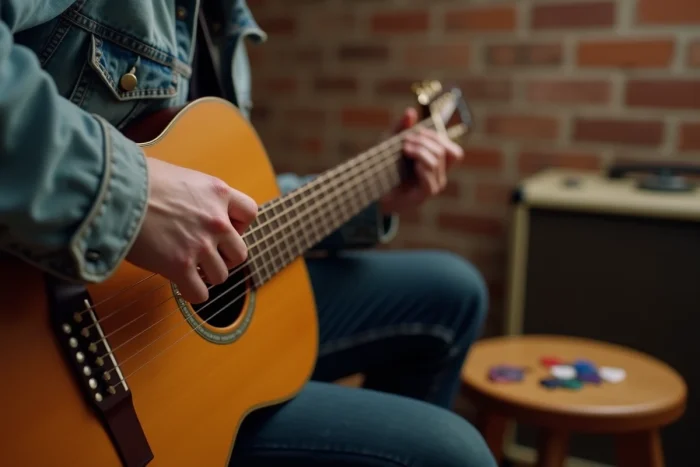
This phenomenon of mimicry is particularly pronounced in Southeast Asia and Latin America, where fan communities adopt the detail as a style element without reference to status or drugs.
Superstitions and beliefs related to the little finger nail
Beyond status and fashion, popular beliefs surround this practice in certain regions. In Réunion, keeping the little finger nail long is part of a cultural heritage that blends Creole traditions and Asian influences. The gesture is passed down from generation to generation, sometimes without explicit explanation.
In other contexts, the long nail on the little finger is associated with protective virtues or luck. These beliefs remain difficult to document systematically, as they circulate orally and vary from family to family.
A gesture transmitted without a manual
The meaning of the long nail changes depending on who wears it and where it is worn. The same physical detail can signify wealth in Shanghai, marginality in New York, style on Instagram, or a family superstition in Saint-Denis de La Réunion.
This polysemy explains the persistence of the practice. It does not require a cultural consensus to survive: each group assigns its own meaning to it, and the nail continues to grow.
The long little finger nail remains one of those rare bodily codes that withstand uniform globalization. Where most aesthetic markers eventually converge toward a global norm, this one retains contradictory local readings, ensuring a longevity that few trends can claim.