Ranking Spanish personalities by global notoriety requires distinguishing between lasting influence and fleeting media buzz. Here we adopt a strict criterion: measurable transnational recognition, meaning the ability of a figure to be identified outside the Spanish-speaking world, across all generations. This top 10 of Spanish celebrities combines heritage figures and still-active profiles, prioritizing depth of influence over mere national popularity.
1. Pablo Picasso – the most universal Spanish name in art

Picasso remains the absolute reference when discussing 20th-century modern art. Born in Málaga, he traversed cubism, surrealism, and neoclassicism without ever being confined to a single movement.
His notoriety far exceeds the circle of art enthusiasts. The name “Picasso” serves as a global cultural marker, used in advertising, fashion, and everyday language. Among the most famous Spanish celebrities, he occupies a unique place because his influence permeates disciplines unrelated to painting.
2. Rafael Nadal – sports domination and global image
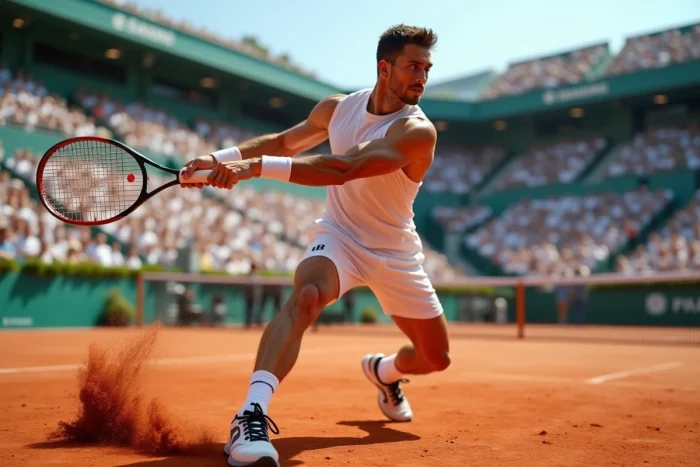
Nadal has built his legend on clay courts, but his global recognition extends beyond tennis. His rivalry with Federer and Djokovic has created a sports narrative followed across all continents for nearly two decades.
What sets Nadal apart from other Spanish athletes is the consistency of his media visibility outside of competition. His advertising contracts and appearances in mainstream media make him a permanent ambassador for Spain in global sports.
3. Salvador Dalí – surrealism and personal marketing ahead of his time
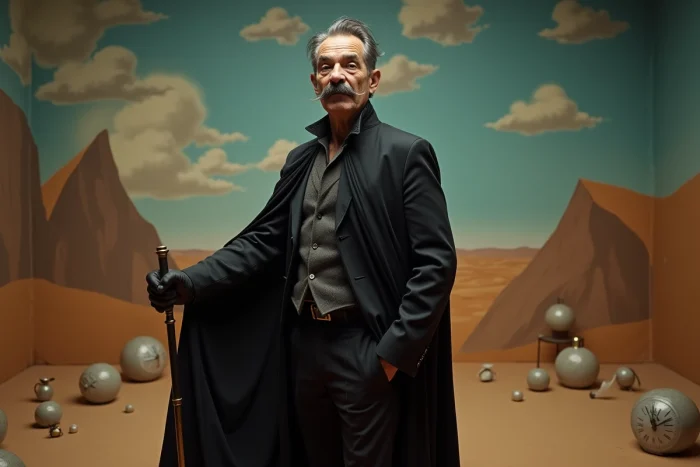
Dalí understood before anyone else that artistic celebrity is also built through personal image. His mustache, provocative statements, and collaborations with cinema created an instantly recognizable character.
Born in Figueras and trained at the School of Fine Arts in Madrid where he mingled with García Lorca and Buñuel, he exported surrealism far beyond European galleries. His museum-theater in Figueras remains one of the most visited in Spain.
4. Penélope Cruz – first Spanish actress to win an Oscar
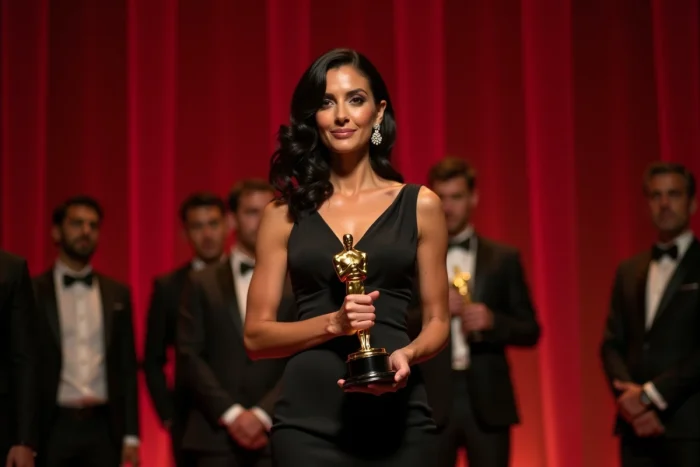
Cruz has crossed the Hollywood barrier without abandoning European auteur cinema. Her regular collaboration with Almodóvar has given her an artistic credibility that most international actresses do not achieve by switching markets.
Her Oscar and multiple nominations place her in a unique category: that of actresses capable of carrying a film in both Spanish and English, with the same level of critical recognition.
5. Pedro Almodóvar – the director who redefined Spanish cinema
Almodóvar has made Spanish cinema an exportable genre. Before him, Iberian productions circulated little outside of festivals. His films have imposed an aesthetic, tone, and themes recognizable from the very first minutes.
We observe that his filmography functions as a catalog of contemporary Spanish society, which explains why international festival programmers continue to consider him a safe bet, several decades after his debut.
6. Fernando Alonso – record longevity in Formula 1
Alonso has won two world titles, but it is his longevity in F1 that distinguishes him. Still active on the circuits at an age when most of his rivals have retired, he embodies a rare form of sporting resilience.
His notoriety exceeds the circle of motorsport fans. In Spain, he popularized F1 among an audience that did not follow the discipline before his first podium finishes.
7. Miguel de Cervantes – the father of the modern novel
Cervantes is not a celebrity in the media sense, but Don Quixote remains one of the most translated works in the world. His influence on Western literature is comparable to that of Shakespeare for the English-speaking world.
The Spanish language itself is sometimes referred to as “the language of Cervantes,” which reflects his symbolic weight. No other Spanish writer has achieved this level of universal recognition.
8. Ester Expósito – the new generation driven by streaming

Expósito illustrates a shift in the making of Spanish celebrity. Revealed by series broadcast on global platforms, she has amassed an international audience without going through the traditional cinema circuit.
Streaming platforms have changed the rules of Spanish notoriety abroad. In 2026, Expósito became highly visible again in international media, confirming that contemporary celebrity is now built as much on networks as on cinema screens.
9. Iker Casillas – the goalkeeper who brought Spanish football to the top
Casillas was the face of Spanish football during its golden period. His role in the national team’s victories has given him a stature that transcends the Real Madrid framework.
In a country where football remains the king of sports, Casillas occupies a special place: that of a player identified with a victorious national team, not just a club. His retirement has not diminished his media visibility in Spain or Latin America.
10. Francisco Goya – the critical gaze that transcends centuries
Goya closes this ranking because his work continues to be exhibited and studied in the world’s greatest museums. His black paintings and engravings on the horrors of war constitute a visual corpus found in textbooks in dozens of countries.
His ability to document political violence with unprecedented frankness for his time earns him recognition that transcends the history of art. Goya remains the most cited Spanish painter in studies on the relationship between art and power.
This ranking reflects a balance between heritage legacy and contemporary visibility. Historical figures like Picasso or Cervantes maintain a structural advantage, but the emergence of profiles like Ester Expósito shows that streaming and social networks are reshuffling the cards of Spanish notoriety internationally.