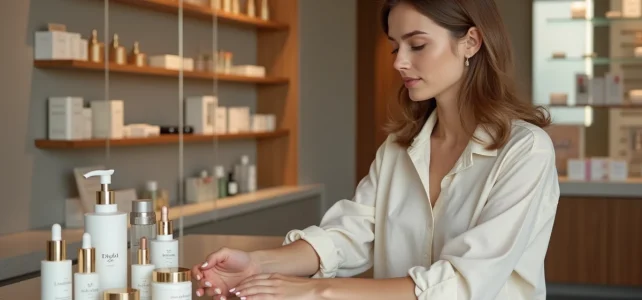
Some brands enjoy unwavering loyalty despite the constant arrival of new players. However, the stability of preferences does not guarantee the absence of fierce competition. In France, the diversity of expectations forces beauty companies to quickly adapt to market changes.
Established brands coexist with newly launched labels, each striving to establish themselves in a sector that is always in flux. The competitive landscape is constantly reshuffled, driven by innovations, emerging trends, and the highly specific demands of French consumers.
Overview of Trends and Expectations of French Consumers in Beauty
The beauty sector in France operates as a field of experiments and advancements. Consumer desires are constantly evolving, navigating between naturalness, transparency, and social responsibility. Many are turning to products with clear compositions, sourced from sustainable channels. Clean beauty is gaining momentum, propelled by rigorous labels and a growing desire to know everything about the origin of products.
In Paris, Typology stands out with its streamlined formulations and committed transparency. Herbivore Botanicals appeals to those who seek holistic well-being that does not separate health from respect for the planet. As for Ren Clean Skincare, it is committed to ocean protection and prioritizes recycled packaging. These strategies respond to a deep need: to consume consciously, with the feeling of making the right choice.
Social media, on the other hand, disrupts routines. TikTok, for example, brings brands like Laneige, a new reference in K-beauty, into the spotlight. Influence is also built through specialized communities, UGC, word-of-mouth, and collaborations with prominent artists. Today, the French public is turning to brands that tell a true story, focusing on quality and innovation.
In the rankings of the most appreciated beauty websites, only those that anticipate public desires and combine expertise, ethics, and sensory experience manage to stand out. To stay in the race, the direct competitor of Rituals must continuously revise its approach and prove its worth, as evidenced by the article “Competitors of Rituals: Discover who the main players in the market are! – Le Blog Beauté”.
Which Brands Compete Today with Rituals in the French Market?
The direct competition of Rituals in the French beauty market is distinguished by its ability to combine naturalness, sensory experience, and responsible innovation. Yves Rocher, a historical figure, capitalizes on its plant-based ingredients, affordable prices, and organic labels. Its dense network of stores, combined with an online offering, makes it one of the brands favored by a broad clientele seeking quality products rooted in an ethical approach.
In contrast to this reimagined tradition, the contemporary scene sees the emergence of Typology. This Parisian house imposes a radical requirement: minimalist formulas, transparency about ingredients, and traceability of production. Typology embodies a movement that appeals to a generation in search of simplicity, far from flashy promises and opaque compositions.
Several brands are now asserting themselves in this competitive dynamic:
- Herbivore Botanicals attracts an informed audience with its natural skincare, commitment to recyclable packaging, and a holistic approach to well-being.
- Ren Clean Skincare, a pioneer of clean beauty, relies on recycled packaging and engages in partnerships for ocean protection.
Each in their own way, these brands align with Rituals by focusing on experience, a strong brand narrative, and the promise of a beauty ritual that meets today’s expectations. The French sector, influenced by a public attentive to quality, ecology, and novelty, sees its landscape evolving relentlessly. Positions are gained and lost quickly, driven by savvy buyers in search of meaning.

Responding to Local Preferences: How Brand Image Shapes Success
In France, taking care of one’s brand image is not a trivial matter. Informed consumers scrutinize commitments, traceability, and the consistency between words and actions. The choice of natural ingredients, transparency, and ethics directly influence the ranking of beauty brands. Those that focus on labels, certifications, or honest communication about their sourcing bolster their reputation.
Highlighting local roots, betting on made in France, or asserting a strong local identity are all levers to attract the French clientele. Brands that invest in physical stores while also focusing on e-commerce, and that carefully manage their communication around the supply chain, gain a competitive edge. It is evident that brands that emphasize naturalness, the simplicity of compositions, or the moderation of prices, as well as those that make sensory experience a central focus, are progressing rapidly.
Among the winning strategies, we find:
- Environmental commitment: recycled packaging, biodiversity advocacy, zero waste initiatives.
- Digital strategy: leveraging micro-influencers, valuing user-generated content, viral campaigns on TikTok.
- Cultural resonance: collaborations with personalities from pop culture, K-pop inspiration, adapting visual codes to a young urban audience.
In the face of the rise of clean beauty and an increased demand for quality and responsibility, only brands capable of integrating into the daily lives of the French are thriving. This dynamic, driven by social and technological innovation, makes the beauty market a field where only the most agile and sincere succeed in lasting. It remains to be seen what new narratives will soon reshuffle the cards in this ever-evolving sector.