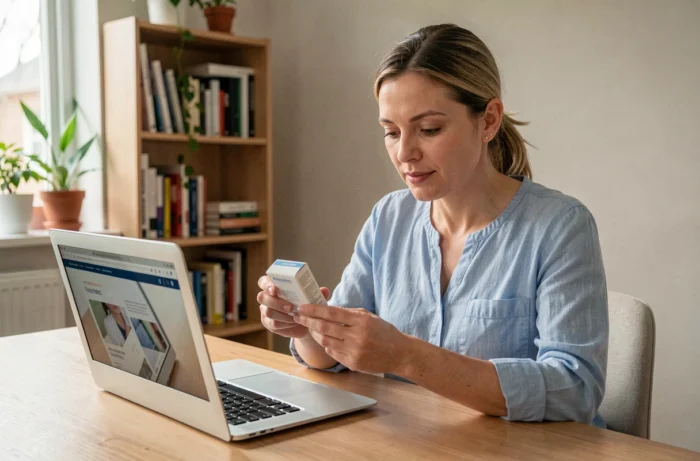
In France, an online pharmacy is the digital extension of a licensed brick-and-mortar pharmacy. The pharmacist who owns the pharmacy remains personally responsible for dispensing the products sold on the website. Only medicines that do not require a prescription may be sold online. This rule clearly distinguishes the French framework from that of other European countries, where authorization requirements vary.
European logo and official register: the only check that matters
Most guides recommend looking for the common European logo on an online pharmacy’s website. This green-and-white symbol, identical across the European Union, indicates that a website is authorized.
The useful step is not simply to check whether the logo is there, but to click it to access the official register. In France, clicking the logo should take you to the website’s listing maintained by the French National Order of Pharmacists. A logo that redirects to an internal page on the seller’s website, or leads nowhere, does not confirm that the pharmacy is authorized.
The Order of Pharmacists publishes a searchable list of websites authorized to sell medicines. This is the reference source for checking whether a pharmacy has properly declared its online sales activity to the regional health agency (ARS). Among the listed platforms is https://pharmavia.fr, which illustrates how a brick-and-mortar pharmacy can extend its services online.

Online pharmacy or intermediary platform: identify the actual seller
One point that is rarely addressed is the difference between a pharmacy that manages its own website and an intermediary platform that brings together several sellers. In the latter case, a third-party pharmacy may ship the product, and dispensing conditions may not always be the same.
To clear up any uncertainty, three details should be clearly displayed on the website:
- The name and physical address of the associated pharmacy, along with its license number
- The identity of the pharmacist responsible for the website
- Direct access to pharmaceutical advice (via a form, chat, or phone) so you can speak with a qualified pharmacist before or after making a purchase
If any of these details are missing, exercise caution, even if the website offers attractive prices or a wide range of healthcare products.
Customer reviews and warning signs: what they tell you—and what they don’t prove
Customer reviews can provide insight into service quality (delivery times, packaging condition, and how responsive the pharmacist is). However, no review proves that a website is authorized or that a medicine complies with regulations.
A few clues can help you distinguish useful reviews from misleading displays. Dated, regular reviews that mention specific details about delivery or packaging are more reliable than generic comments posted in a flurry. How the seller responds to negative reviews can also indicate its level of transparency.
The first priority is always to check whether the website is listed in the Order of Pharmacists’ register. Reviews are supplementary, never a substitute.
Foreign websites displaying the European logo
A website based in another European Union country may legally sell medicines online, but it must follow the rules of the country where it is established. French regulations do not automatically apply to these websites. For a foreign website, check the register in the relevant country, not the French Order’s list.
Suspect product after delivery: what evidence to keep and what steps to take
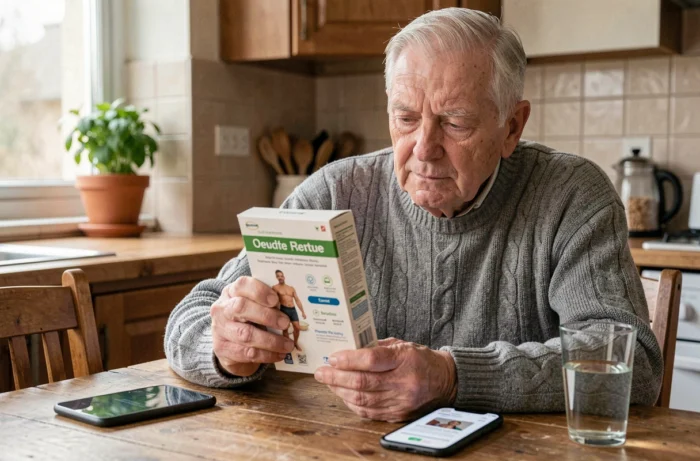
None of the usual guides explain what to do after opening a package if the product seems suspicious. Damaged packaging, a missing leaflet or one in an unfamiliar language, or a tablet whose color or texture differs from the manufacturer’s description: any of these should prompt a specific response.
First, do not take the product—or stop taking it immediately if you have already used it and experience an unusual reaction. Then make sure to keep:
- The original packaging, including the blister pack or bottle, with the batch number visible
- The leaflet, if included, or a photo showing that it was missing
- The order confirmation and invoice (a screenshot or email)
- All correspondence with the website (messages, chat, or email exchanges)
This information will help when speaking with a community pharmacist or doctor. It is also needed to report the website through the French National Agency for the Safety of Medicines and Health Products (ANSM) or via the pharmacovigilance system.
Contact a pharmacist first
A community pharmacist can visually assess a suspicious product and advise you on the appropriate next steps. If you have taken the product and experience an adverse effect, reporting it to the regional pharmacovigilance center helps support health monitoring. Filing a report does not initiate legal proceedings; it helps protect other buyers.
The most useful rule is never to throw away a suspicious product before consulting a healthcare professional. Keeping a record of the product—from its batch number to proof of purchase—is essential for any subsequent action, whether you are seeking a refund or making an official report.
Choosing a reliable online pharmacy comes down to a quick but essential check: clicking the European logo must take you to the official register, and the website must display the full details of the pharmacy and the pharmacist responsible. Low prices or a wide product range are never a substitute for these checks. If you have doubts after receiving an order, keep all evidence and consult a community pharmacist—the most direct way to protect your health.